Components / navigation
Carousel builder
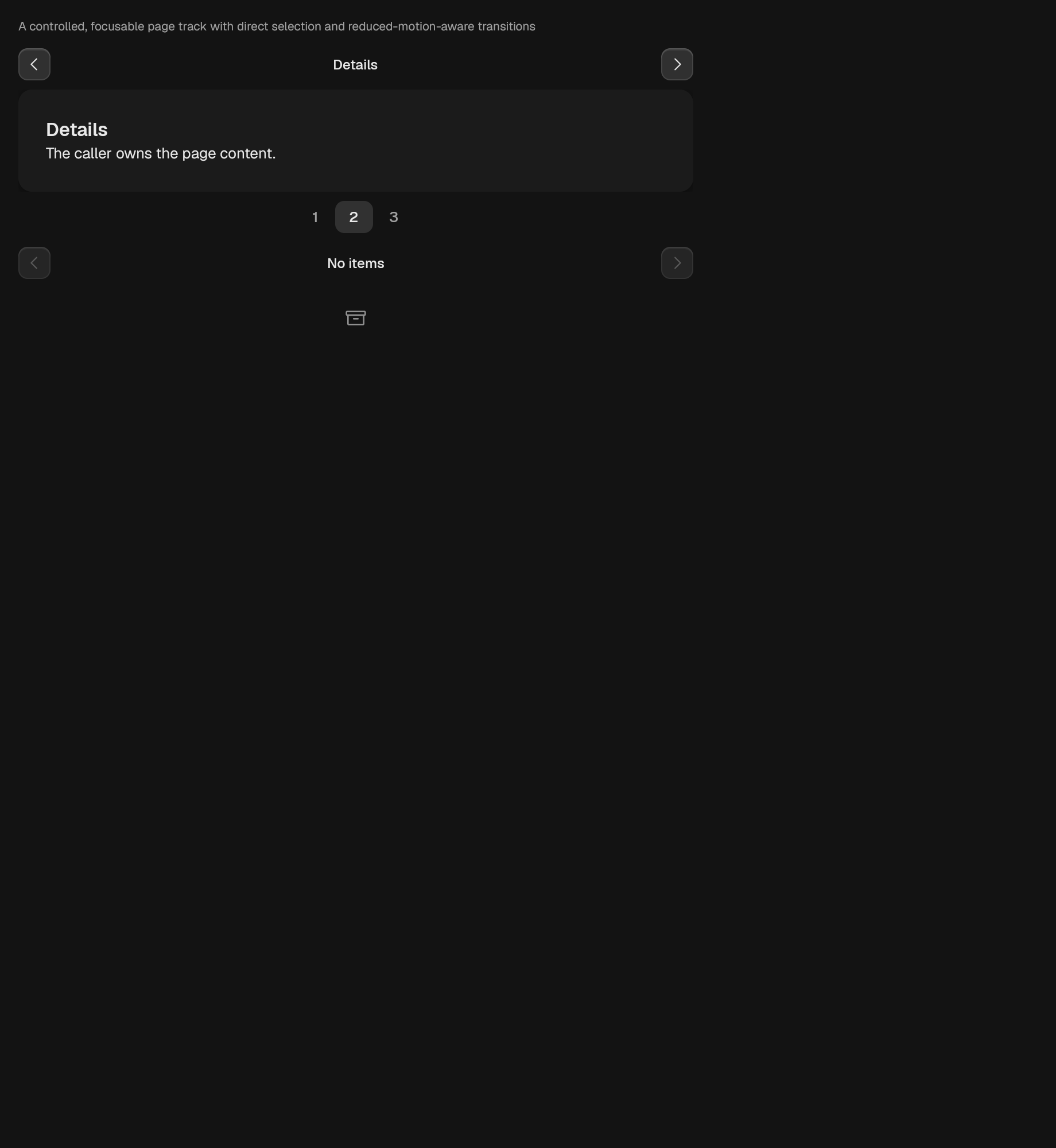
A token-backed paged viewport.
A builder is RenderOnce. Construct and mount it in one expression.
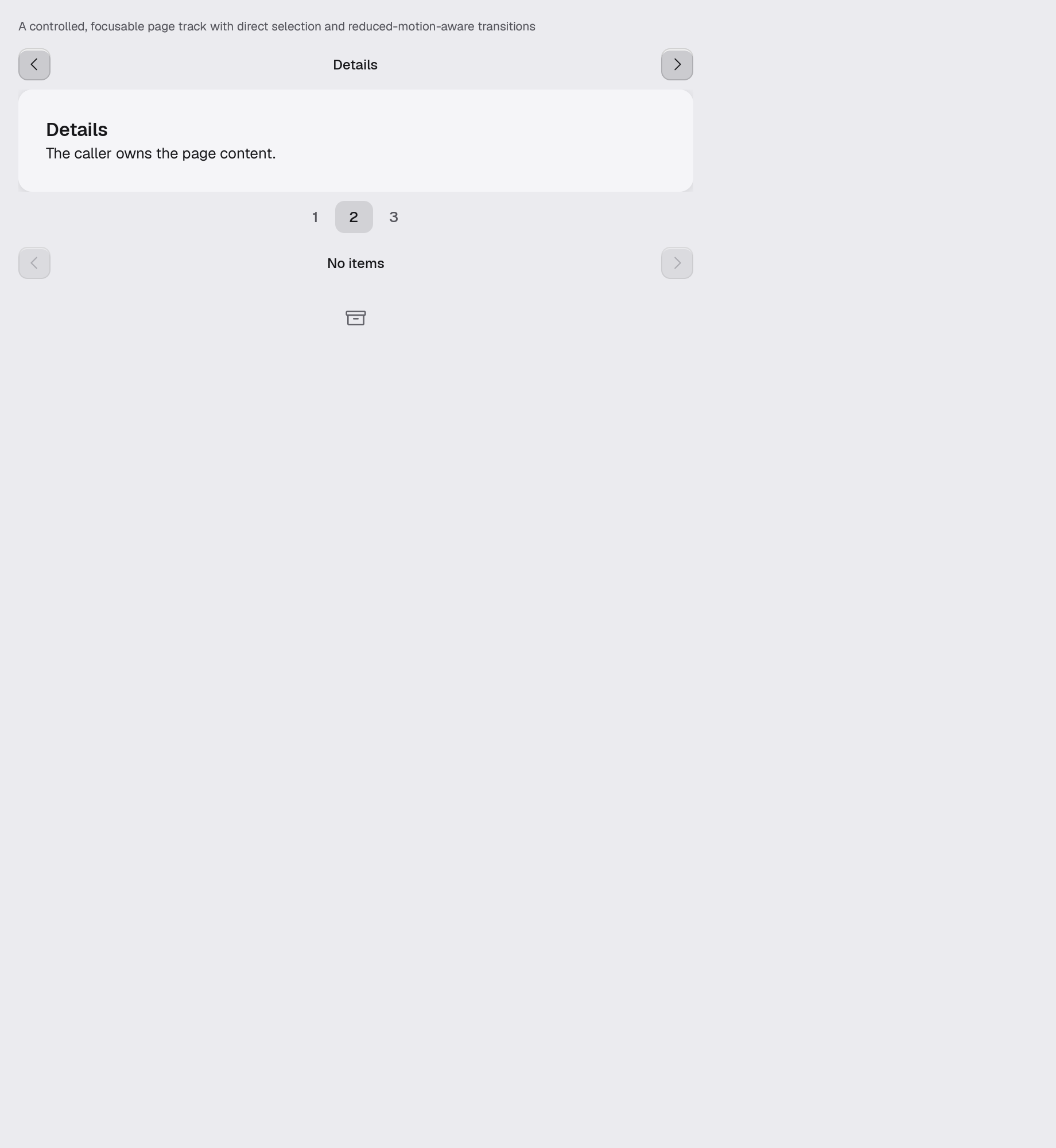
use gpui_kit::navigation::Carousel;Reviewed in carousel.
Construct
new(ident: impl Into<Ident>) -> SelfOptions
Chain onto the value.
items(items: impl IntoIterator<Item = CarouselItem>) -> Self
active(id: impl Into<SharedString>) -> Self
phase(phase: Phase) -> Self
reason(reason: impl Into<SharedString>) -> Self
stale(stale: bool) -> Self
looped(looped: bool) -> Self
on_event(handler: impl Fn(CarouselEvent, &mut Window, &mut App) + 'static) -> Self
Reports
The variants of the event it emits. It never applies the change itself.
- Previous
- Next
- Selected
Example · carousel
fn carousel(_window: &mut Window, cx: &mut App) -> AnyElement {
    let theme = cx.theme().clone();
    let page = |id: &'static str, label: &'static str, text: &'static str| {
        CarouselItem::new(
            id,
            label,
            Card::new()
                .id(format!("scene.carousel.card.{id}"))
                .padding(Space::Xl)
                .child(crate::foundation::text(&theme, TypeScale::Title, label))
                .child(crate::foundation::text(&theme, TypeScale::Body, text)),
        )
    };
    stack(&theme)
        .w(px(620.0))
        .child(caption(
            &theme,
            "A controlled, focusable page track with direct selection and reduced-motion-aware transitions",
        ))
        .child(
            Carousel::new("scene.carousel.ready")
                .items([
                    page("overview", "Overview", "The first page is active."),
                    page("details", "Details", "The caller owns the page content."),
                    page("history", "History", "The track reports page intents."),
                ])
                .active("details")
                .looped(true)
                .on_event(|_, _, _| {}),
        )
        .child(
            Carousel::new("scene.carousel.empty")
                .phase(Phase::Empty)
                .on_event(|_, _, _| {}),
        )
        .into_any_element()
}